
Germination temperature
Most seed germinates at around 18 °C (64 °F) (RHS). Cool-season herbs start lower (chervil from 10 °C / 50 °F soil); warm-season herbs such as basil and tulsi need more warmth.
 Visit deodar-seeds.in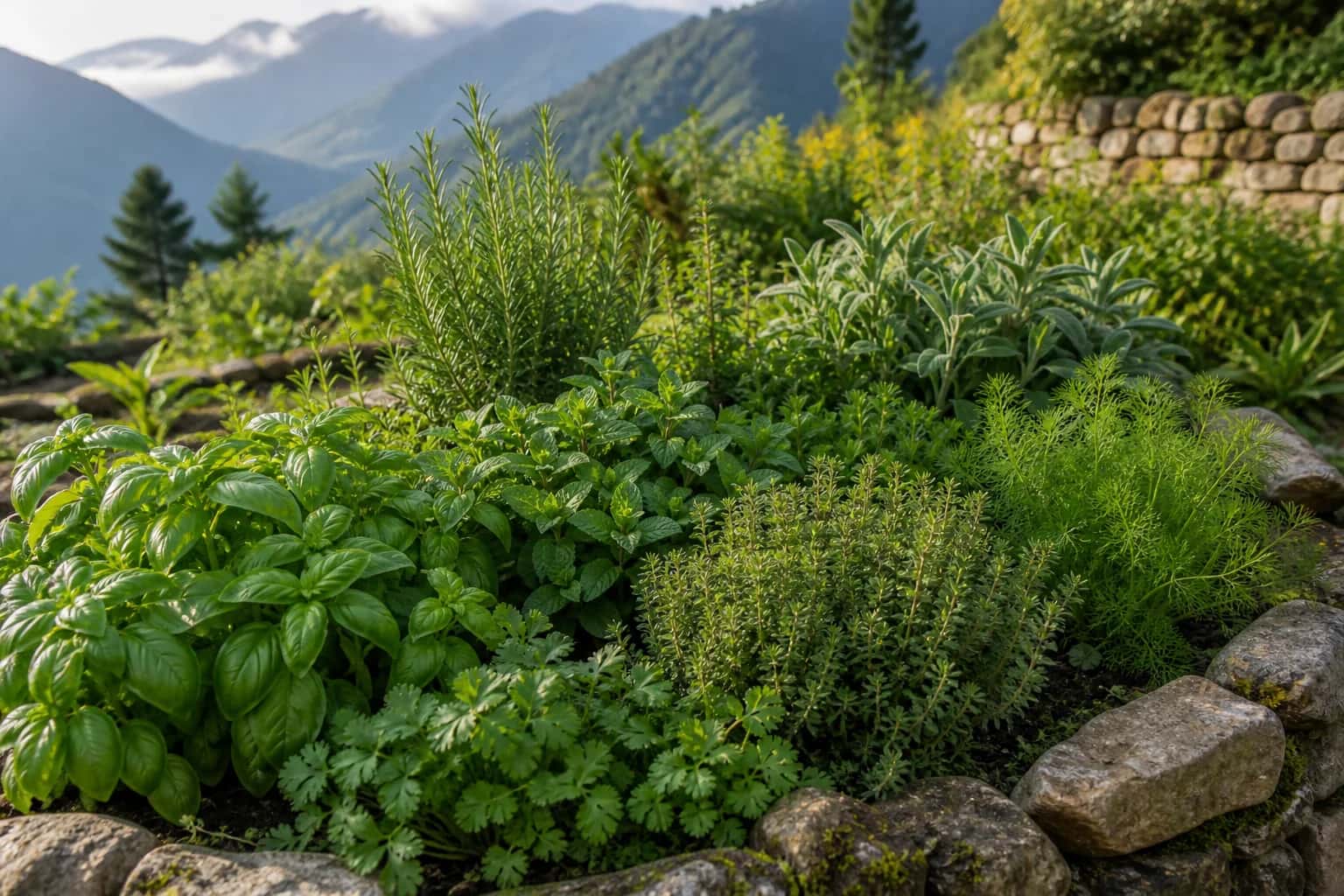
73 growing guides
Kitchen herbs, spices, traditional medicinal plants, forage legumes, wild meadow plants and a few shrubs and trees, all raised from seed. Sowing needs vary widely, so start with the group your plant belongs to.
This is Deodar's broadest topic. It covers culinary herbs and spices such as basil, coriander, dill and fenugreek; plants used in traditional medicine systems such as tulsi, ashwagandha and shatavari; forage and green-manure plants such as lucerne, sunn hemp and buffel grass; wild meadow plants and weeds such as dandelion, mullein and shepherd's purse; and a few ornamentals, shrubs and trees that were filed here, such as cineraria, hopbush and broad-leaved bloodwood. What they share is that most are grown from seed for their leaves, seeds, roots or ground cover rather than for fruit or flowers. Seed sizes run from dust-fine to large hard-coated beans.
Most seed germinates at around 18 °C (64 °F) (RHS). Cool-season herbs start lower (chervil from 10 °C / 50 °F soil); warm-season herbs such as basil and tulsi need more warmth.
Cover seed to about 2-3 times its diameter, or no deeper than the seed itself for small seed. Light-needing seed such as basil is barely covered.
Usually none. Hard-coated legumes (lucerne, clover, sunn hemp, velvet bean) may need nicking or a soak; some wild perennials need a cold, moist period.
Temperate gardens: spring to late summer, with repeat sowings about every three weeks. Hot climates: cool-loving herbs such as coriander and dill in the cooler months, warm-loving ones such as basil in the warm season.
Annual leaf herbs give pickings in the same season; perennial herbs, roots and woody plants take one to several years.
Coriander, dill, caraway and chervil grow fastest sown where they will stay and thinned rather than moved; RHS thins dill to 20 cm (8 in).
Basil, parsley, chives, sage and thyme are often started in small pots or a propagator with gentle bottom heat, then planted out.
Short-lived annuals such as coriander and dill run to seed quickly, so sow small batches every few weeks for a steady supply.
Shrubby herbs such as sage and lavender grow from seed but are also propagated by cuttings; mint and French tarragon are usually grown from cuttings or division instead.
Coriander, dill, fennel, anise, ajwain (carom), chervil, black cumin, fenugreek (methi), garden cress.
Basil, tulsi (holy basil), lemongrass, sesame, ashwagandha, kalmegh.
Sage, English lavender, German chamomile, common yarrow, elecampane, shatavari, gotu kola, cardamom, Himalayan meadow rue.
Lucerne (alfalfa), red clover, sunn hemp, shrubby stylo, velvet bean, buffel grass, rescuegrass.
Dandelion, shepherd's purse, broadleaf plantain, mullein, stinging nettle, knotgrass, common rush; sow on or near the surface.
Cineraria, caladium, Tacca palmata, ornamental allium, Jerusalem cherry (its berries are poisonous), hopbush, broad-leaved bloodwood.
Fine seed sown too deep never emerges. Press it onto the surface or cover with a dusting of compost.
Moved seedlings often bolt. Sow them in place and thin.
A hard-coated legume, a dust-fine wild plant and a slow perennial need different handling; check the species guide.
Some plants here, such as summer cypress and buffel grass, spread readily and are restricted or regarded as weeds in some regions. Check local rules before sowing.
Pick your plant's guide below, then choose seed for the season you are sowing in.
Coriander is a short-lived annual that bolts quickly in heat. Sow small batches every few weeks and give it the cooler part of the year in hot climates.
Most herbs do not. Soaking or nicking helps hard-coated legume seed such as lucerne, sunn hemp or velvet bean; the individual guide says when.
Many, such as tulsi, ashwagandha and kalmegh, are raised from seed. These guides cover growing only, not medicinal use.
Open the guide that matches the seed name on your packet.