Visit deodar-seeds.in



About this variety
Seed-grown plants are not copies of the parent
Pomegranate seed gives genetically varied seedlings, so fruit from a seed-grown tree can differ from the fruit the seed came from. The University of Florida (UF/IFAS Citrus Research and Education Center) states that seed propagation is generally less desirable than cuttings when a plant's characteristics must be kept, because cuttings are clones. Buy seed to grow a pomegranate shrub or tree and to see what it gives, not to reproduce a named variety.
Sowing
ICRAF says no seed pretreatment is required and gives an average germination of 30–70%. UF/IFAS advises removing the pulp, rinsing the seed and, if desired, drying it and refrigerating it for up to a few weeks before sowing; fresh seed can be sown but may germinate less. Sow about 1.3–2.5 cm deep, keep the mix moist and warm: UF/IFAS says warm temperatures of about 24–30 °C are important for germination. Seedlings have flowered within a year in UF/IFAS trials, though seedlings may take longer to flower than cuttings.
Climate and soil
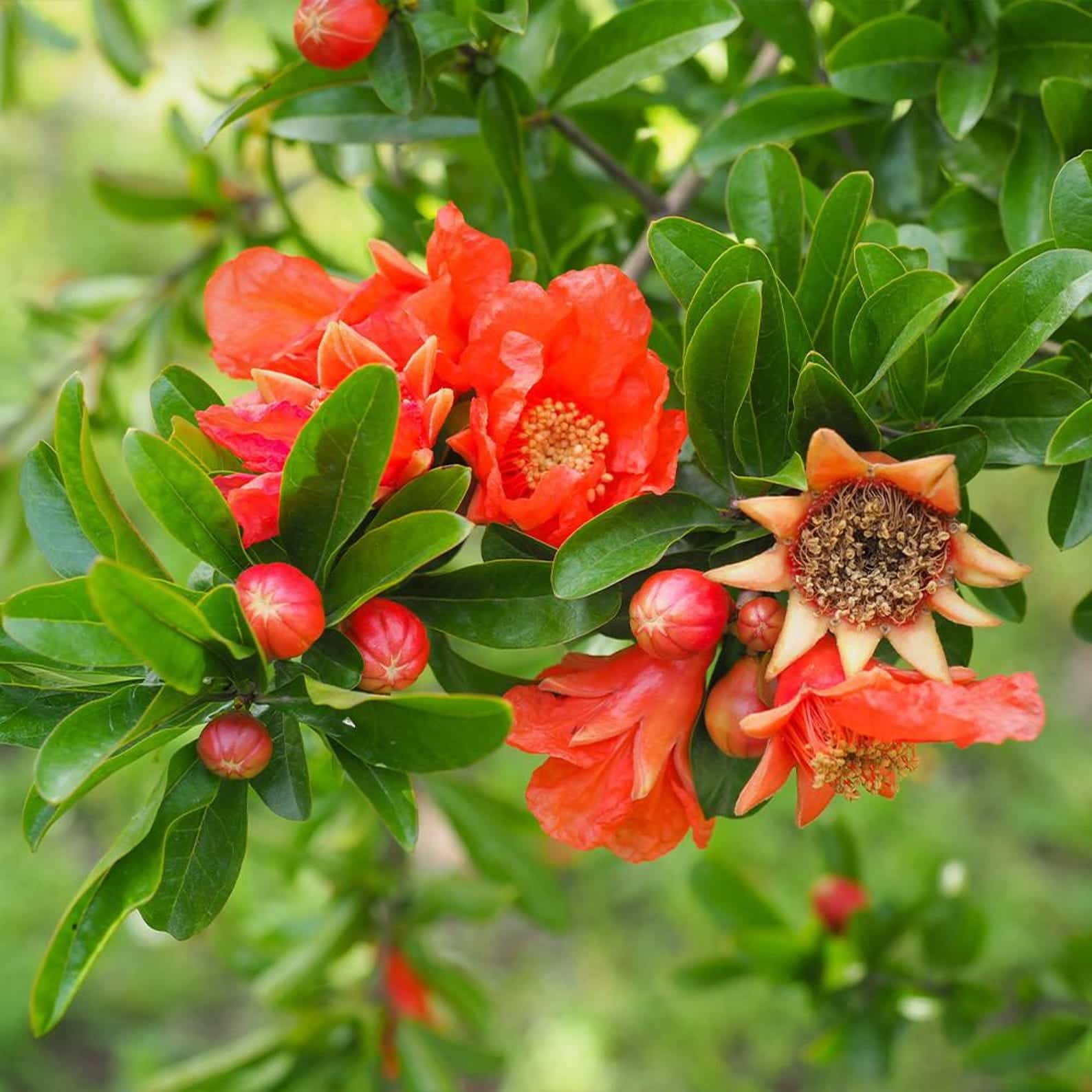
ICRAF gives a height of 5–10 m for a small multi-stemmed shrub or tree, growth up to 1500 m, a mean annual temperature of 20 °C and mean annual rainfall of 1000 mm. Trees are irrecoverably damaged at −11 °C. It tolerates drought, soil compaction and seasonal waterlogging, prefers well-drained soils including calcareous ones, and suffers on strongly alkaline soils.
What the packet is
The packet holds 20 or 50 seeds of Punica granatum, sold under the name Pomegranate. No cultivar, fruit colour or fruiting date is promised, and no germination percentage is claimed for this lot. There are roughly 31,000 seeds per kg.
Also known as: Anar, Dadim, Dalim, Granada, Grenade, Granatapfel, Melograno, Romã, Nar and Rumman.