Visit deodar-seeds.in


About this variety
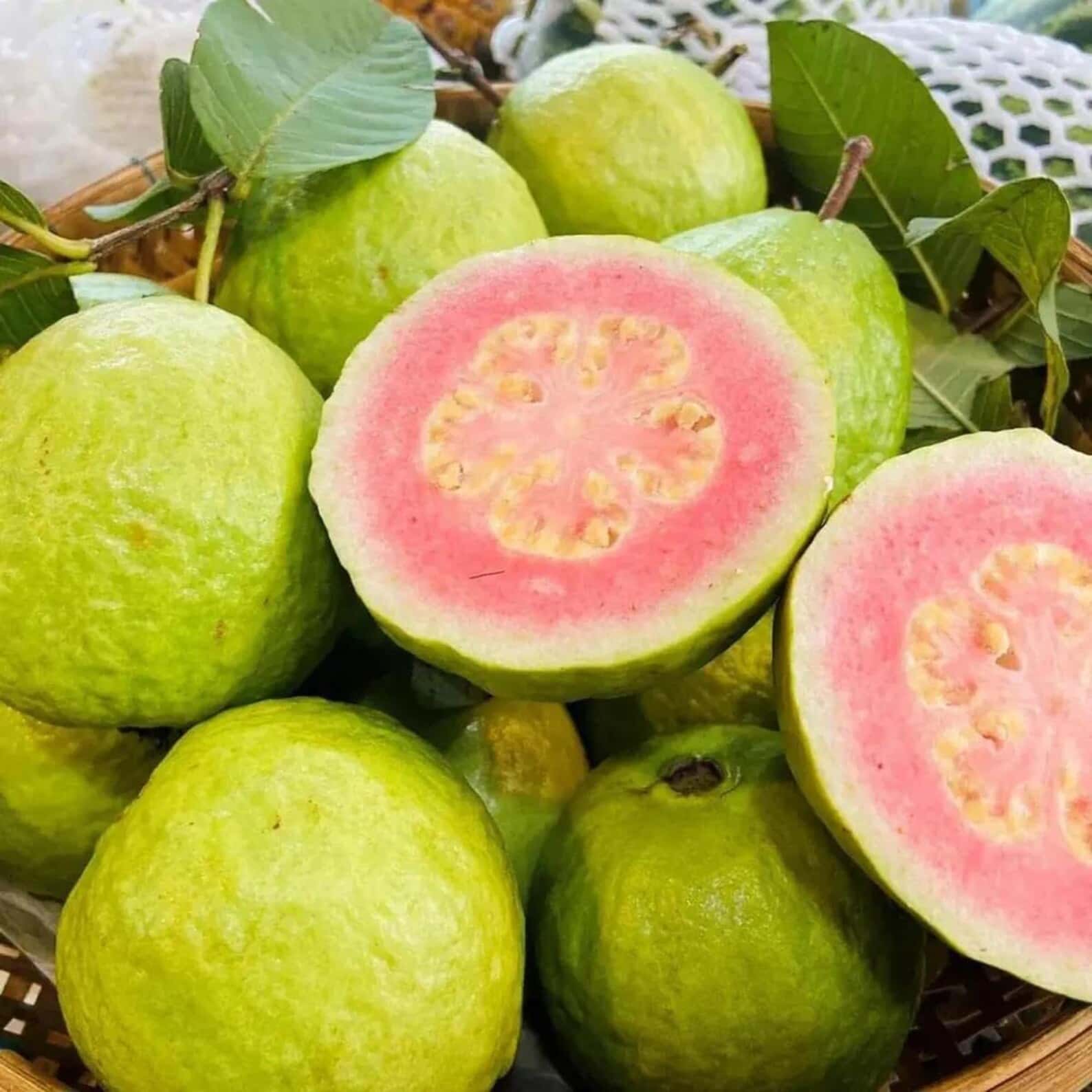
Allahabadi Guava (Psidium guajava) is a medium-sized evergreen fruit tree with smooth bark, oval leaves, white flowers, and aromatic round to oval fruit.
Also known as: Amrud, Peru, Peyara, Koyya, Guayaba, Goyave, Goiaba, Farang, Bayabas and Psidium pyriferum.
For cultivation, choose full sun in a warm tropical or subtropical climate, with protection from frost during early growth. Use a well-draining loam enriched with organic matter and watered regularly while young plants become established. Freshly sown containers should have drainage and good air movement. Natural seed lots vary, so emergence speed and the number of seedlings depend on pretreatment, temperature, moisture, and the grower's conditions.
Seed starting: Soak the seeds in warm water for 24 hours. Sow 0.5–1 cm deep, keep the tray warm at roughly 24–30°C, and maintain gentle moisture. Label the container with the sowing date, keep it out of standing water, and check moisture regularly. Do not discard a sound pot simply because individual seeds emerge at different times.
After emergence, Move seedlings into individual pots after true leaves develop. Increase sun exposure gradually and avoid leaving containers in standing water; established plants appreciate deep watering followed by drainage. Seed-grown plants naturally vary, so fruit traits may not be identical to a named parent selection.
Seeds are intended for propagation. Before planting outdoors, confirm that the species and your growing method are suitable for your climate, available space, and local rules.