
Germination temperature
Warm: lotus at least 25 °C (77 °F) (RHS); thalia needs warm, frost-free conditions.
 Visit deodar-seeds.in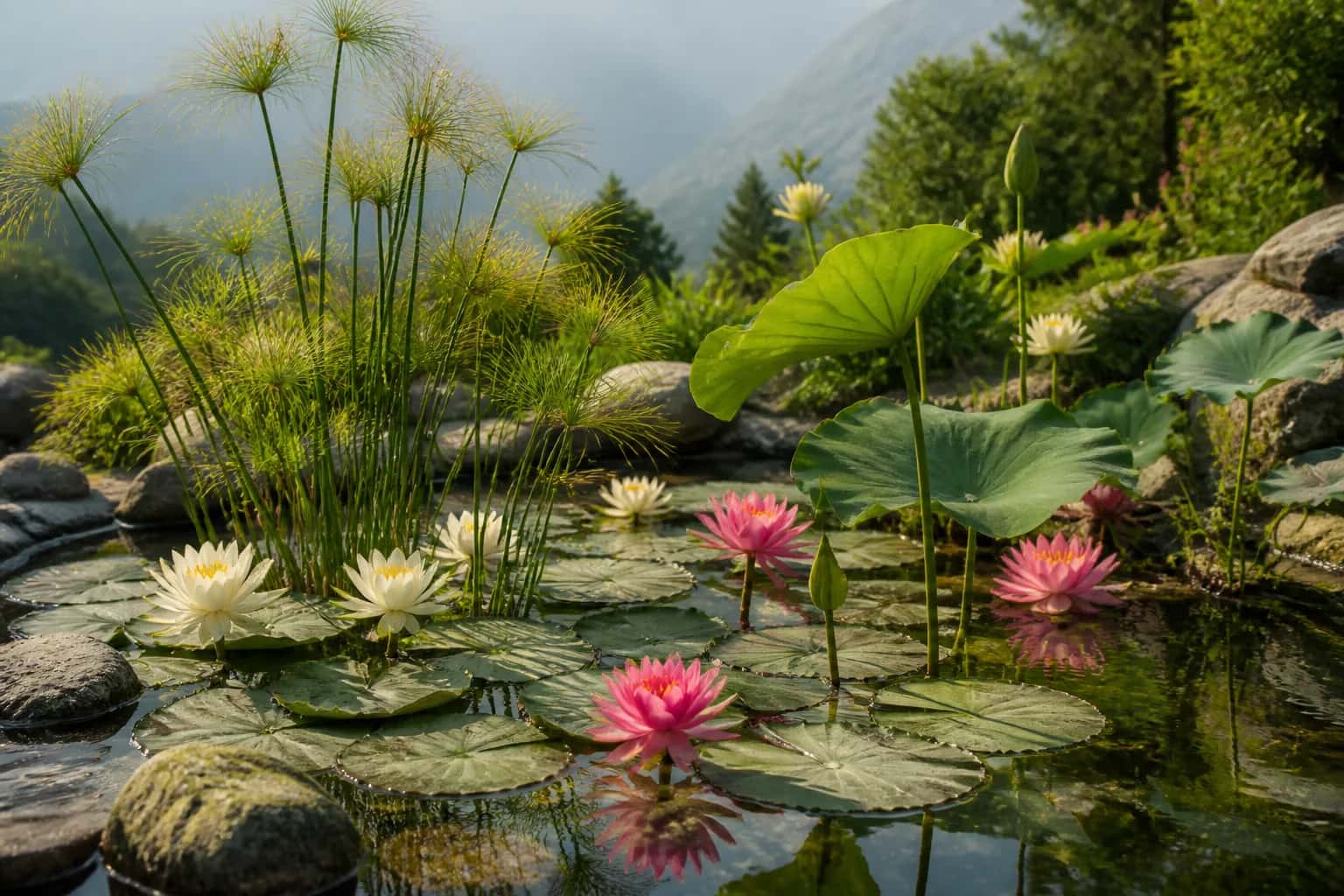
2 growing guides
Lotus and thalia are raised from seed in warm water or wet mud, then moved into pots set in a pond or tub. Both need full sun and warmth.
This topic covers aquatic and marginal plants grown from seed for ponds, tubs and water gardens. Deodar's guides cover two of them: sacred lotus (Nelumbo nucifera), which roots in mud and lifts its leaves and flowers above the water, and thalia or alligator flag (Thalia geniculata), a tall marginal plant for shallow water and wet ground. Both are warm-climate plants that need full sun. Seed is started in small pots of heavy soil kept wet or under water, and the pots are gradually lowered to the plant's final depth. Both can spread beyond a garden pond, so they are best kept in containers and checked against local weed rules.
Warm: lotus at least 25 °C (77 °F) (RHS); thalia needs warm, frost-free conditions.
Lotus: scarify (file or nick) the hard seed coat, then soak in warm water. Thalia: no proven treatment; nicking is optional for slow seed.
Scarified lotus sprouts within about a week in warm water; thalia is irregular, from weeks to a few months.
Heavy loam in small pots, covered by about 5 cm (2 in) of water for lotus; pressed into wet mud for thalia.
Spring and summer in temperate climates; any warm season in the tropics when water stays warm.
Lotus 40-60 cm (16-24 in), or 15-22 cm (6-9 in) for small cultivars (RHS); thalia pots up to about 25 cm (10 in) deep.
Lotus seed will not take up water until the coat is opened: rub one spot on a file or sandpaper until a pale layer just shows, without cutting deep into the kernel, then soak it in warm water.
Use heavy loam or clay soil, not light potting compost, which floats. Press seed in and cover just enough to anchor it.
Stand pots in a bowl or tray of water in a warm, bright place. Change the water if it turns cloudy.
As plants grow, move them into larger containers and gradually increase water depth until they reach their final position in the pond or tub.
In cold climates keep the roots from freezing: drop water levels in autumn and keep lotus containers frost free, as RHS advises.
How to grow lotus from seed covers scarifying, sprouting in water, potting on and overwintering. The older 'Lotus seeds agrotechnic' page covers the same plant.
How to grow thalia from seed covers this tall marginal plant: sowing in wet mud, irregular germination and planting in shallow water.
Free-floating, submerged oxygenating and aquarium plants are not covered here, and 'lotus' in these guides means Nelumbo, not water lilies (Nymphaea).
Untreated lotus seed can sit in water for months. Open the coat first.
Peat-based or fertiliser-rich compost floats and clouds the water. Use heavy loam.
Lotus can spread aggressively and take over a shallow pond, and thalia is an emerging weed of wetlands in warm parts of Australia. Grow both in containers and check local rules.
Lotus rhizomes die if the water freezes down to them. Keep containers in deeper water or frost free in winter.
Start lotus or thalia in warm water and give them a sunny tub or pond.
The seed coat is hard and waterproof. Filing or nicking it lets water in, and germination then starts within days in warm water.
Yes. NC State Extension notes lotus is a noxious weed in some US states and its planting is prohibited in Wisconsin; thalia is an emerging environmental weed in south-eastern Queensland. Keep them in containers and check local regulations.
Open the guide that matches the seed name on your packet.