
Germination temperature
Temperate nuts: warm after chilling, e.g. 20-30 °C (68-86 °F) alternating for pecan tests. Tropical nuts: constant warmth, 25-30 °C (77-86 °F).
 Visit deodar-seeds.in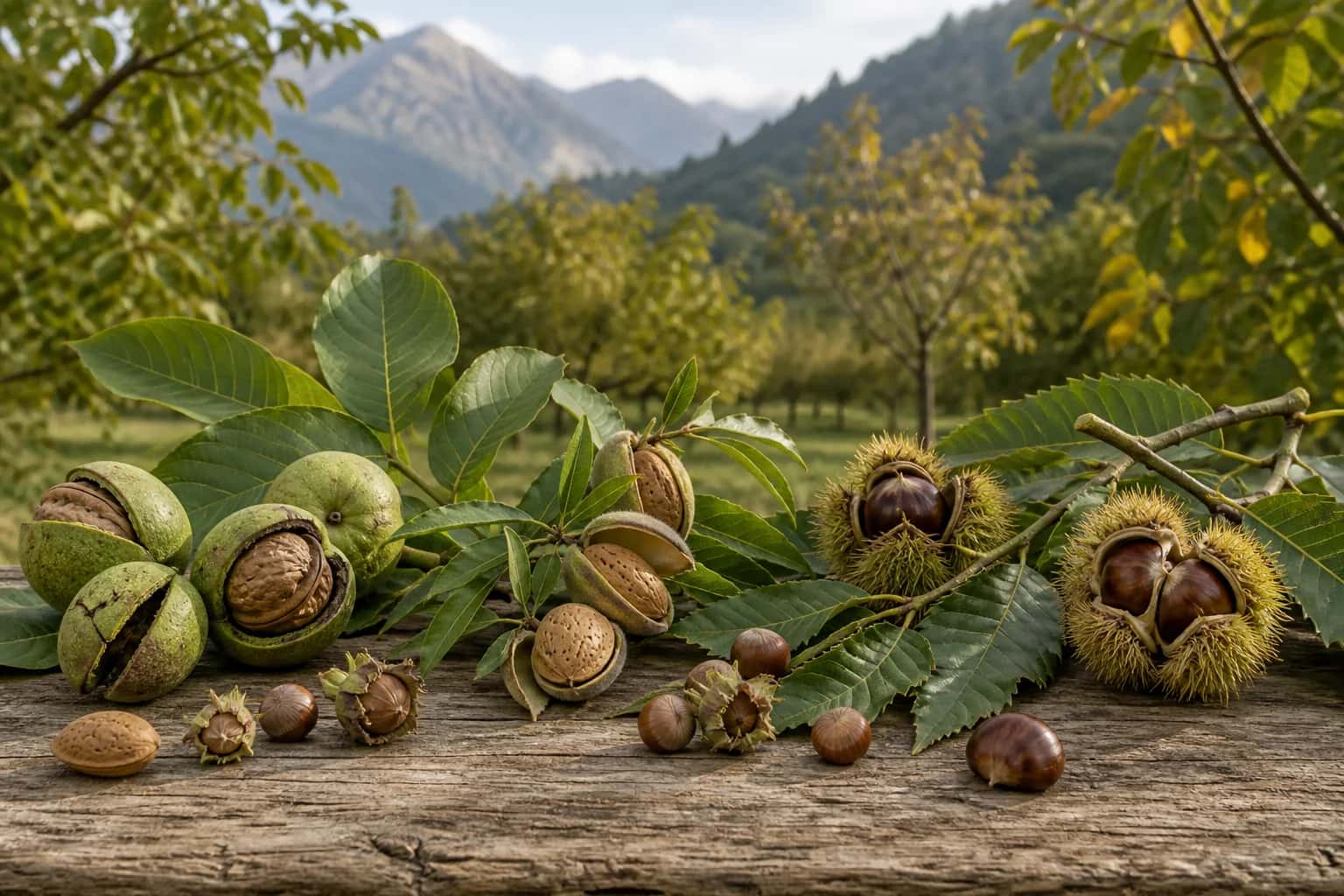
5 growing guides
Nut trees fall into two groups: temperate nuts such as almond and pecan need weeks of moist cold before they sprout, while tropical seeds such as cashew, nutmeg and Brazil nut must be sown fresh and never dried or chilled.
This topic covers trees grown for their nuts or nut-like seeds: almond, pecan, cashew, Brazil nut and nutmeg. They are not one family: almond is a Prunus (rose family), pecan a hickory (walnut family), cashew a relative of mango, Brazil nut a tree of the Amazon and nutmeg a spice tree of the humid tropics. What they share is a large seed, a strong taproot that dislikes disturbance, years of growth before the first crop, and seedlings that do not reproduce the parent exactly, which is why named varieties are grafted. The key choice is the seed type: temperate nuts need cold, tropical ones need freshness and warmth.
Temperate nuts: warm after chilling, e.g. 20-30 °C (68-86 °F) alternating for pecan tests. Tropical nuts: constant warmth, 25-30 °C (77-86 °F).
Almond and pecan: soak, then moist cold at about 1-7 °C (34-45 °F) for weeks to months; USDA gives 30-150 days at 1-4 °C for hickories. Cashew: soak 18-24 hours (KAU). Nutmeg and Brazil nut: sow fresh, never dry.
Cashew 8-20 days (KAU); pecan 35-97 days; nutmeg about 30-90 days; intact Brazil nut 12-18 months.
India: cashew in May before the monsoon (KAU), tropical nuts in warm, humid weather; almond and pecan in cool hill areas after winter chilling. Temperate climates: autumn outdoors or spring after stratification.
Years: cashew seedlings about 3-5, pecan 5-10.
Temperate nuts (almond, pecan) are dormant and tolerate drying; tropical nuts (nutmeg, Brazil nut) die if dried or chilled. Cashew is tropical but not dormant.
Chill temperate nuts in moist sand or a bag in the refrigerator; soak cashew overnight; sow nutmeg at once after removing the rind and mace.
USDA sows hickory nuts 2-4 cm (0.8-1.6 in) deep; KAU sows cashew 2-3 cm deep, stalk end up, one per bag. Deep pots protect the taproot.
Mulch outdoor seedbeds and guard autumn sowings against rodents, as the USDA notes. Graft a named variety later if you want predictable nuts.
How to grow almond from seed (Prunus amygdalus, syn. Prunus dulcis) and the almond guide; How to grow pecan from seed (Carya illinoinensis).
How to grow cashew from seed (Anacardium occidentale) and the cashew guide; How to grow nutmeg from seed (Myristica fragrans), a shade tree whose seedlings are male or female.
How to grow Brazil nut from seed (Bertholletia excelsa) and the Brazil nut guide: a hot, wet-tropics tree whose intact seed can take over a year to sprout.
Nutmeg and Brazil nut seed die if dried; cashew and nutmeg are tropical and frost-tender.
Dormant nuts sit in the soil for months or rot. Give them moist cold first.
Nut trees make deep taproots early. Sow in deep pots or in place and transplant young.
Seedlings vary; KAU recommends grafts for true-to-type cashew, and pecan and almond varieties are grafted too.
Treat temperate nuts with cold and tropical nuts with freshness, and sow them in deep containers.
No. Almond and pecan do; cashew, nutmeg and Brazil nut are tropical and are sown fresh in warmth.
Not reliably. Cashew is cross-pollinated, so KAU recommends grafted plants for true-to-type trees; the same applies to pecan and almond.
Open the guide that matches the seed name on your packet.