
Germination temperature
Most flower seed germinates at around 18 °C (64 °F) (RHS); tender annuals such as zinnia and celosia like it warmer.
 Visit deodar-seeds.in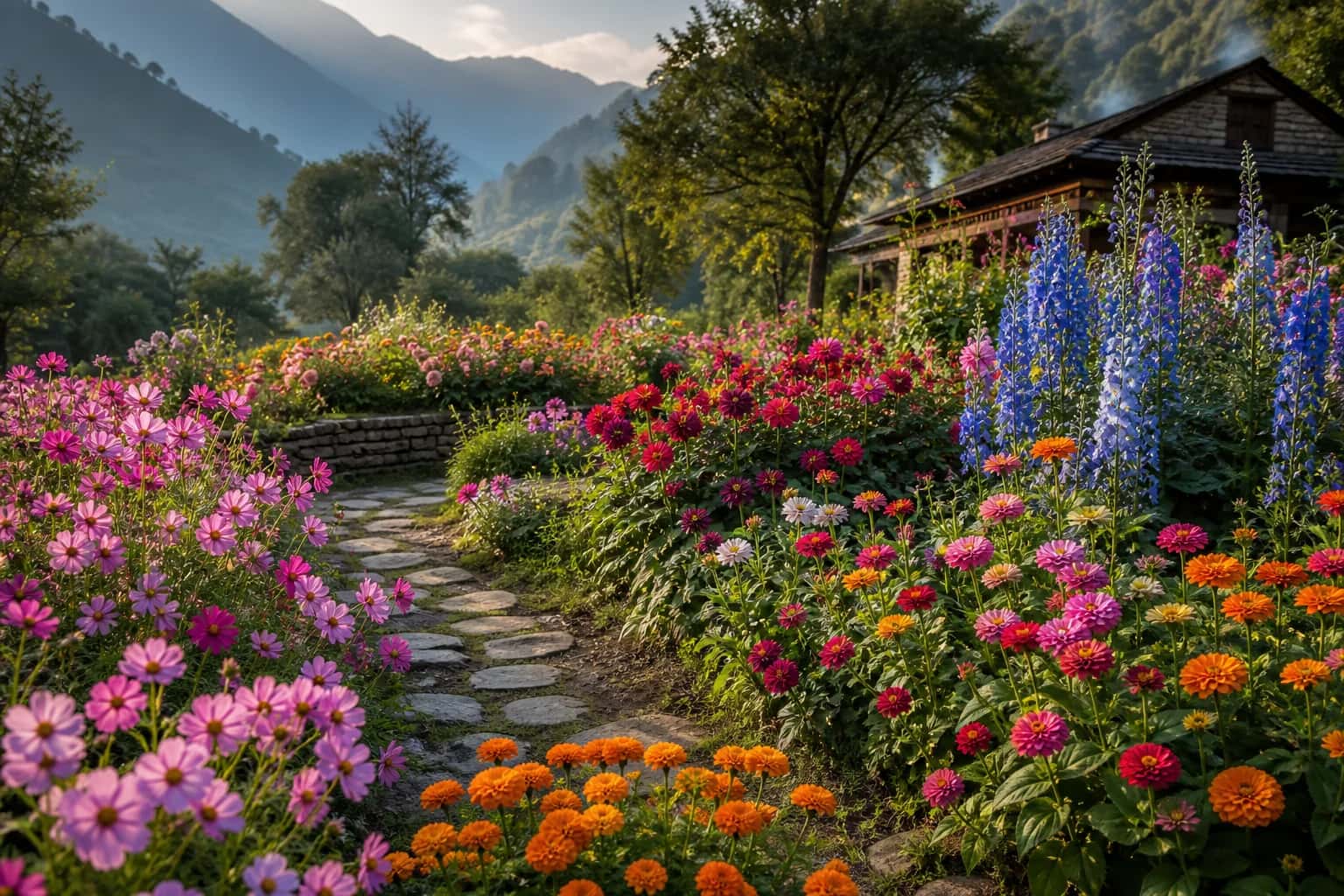
46 growing guides
Annual, biennial and perennial garden flowers, plus a few specialists such as Venus flytrap and orchids, raised from seed. Start by knowing whether your flower is hardy, tender or biennial.
This topic covers ornamental flowers grown from seed: quick annuals such as zinnia, cosmos, marigold and celosia; hardy annuals such as calendula, larkspur and California poppy; biennials such as hollyhock, wallflower and evening primrose; perennials such as lupins, gaillardia, iris and Shasta daisy; and specialists including the Himalayan blue poppy, Venus flytrap and the monkey face orchid. Most share simple needs: a fine, free-draining seed compost, moderate warmth, steady moisture and bright light once seedlings appear. The real differences are frost tolerance, how long the plant takes to flower, and a few seeds that need light, a cold spell or a nicked coat.
Most flower seed germinates at around 18 °C (64 °F) (RHS); tender annuals such as zinnia and celosia like it warmer.
Cover no deeper than the seed's own size; light-needing seed such as snapdragon is pressed onto the surface.
Mostly none. Large hard seeds such as morning glory and lupin benefit from soaking or nicking; some alpine and perennial seed needs a cold, moist period.
Temperate: hardy annuals outdoors in spring or autumn, tender annuals indoors in spring and planted out after the last frost, biennials in summer. Frost-free and Indian plains gardens: heat, not frost, is the limit, so many temperate annuals are grown through the cooler months.
Open the guide that matches the seed name on your packet.
Annuals flower in the season they are sown; biennials usually in their second year; many perennials take a year or more.
Sow outdoors where they will flower, in spring or autumn; autumn sowings flower earlier.
Sow indoors with gentle warmth, prick out when seedlings are large enough to handle, and harden off for about two to three weeks before planting out.
Sow in summer, grow on, and plant into flowering positions in autumn for flowers the next year.
Sow in pots and grow on for a season; carnivorous plants and orchids need their own media and are covered in their guides.
Zinnia, cosmos, French marigold, celosia, globe amaranth, Mexican sunflower, ornamental sunflowers.
Calendula, larkspur, California poppy, clarkia, sweet alyssum, nemesia, stock, nasturtium.
Hollyhock, wallflower, evening primrose, Johnny jump-up and pansy, dianthus (Chinese pink).
Lupins, gaillardia, Shasta daisy 'Silver Princess', garden chrysanthemum, iris, alpine aster.
Himalayan blue poppy, Venus flytrap, monkey face orchid (grown from flasks).
Snapdragon and similar fine seed fails under a thick layer of compost.
Zinnia, marigold and other tender annuals are killed by frost; wait until the frost risk has passed.
Remove glass or a propagator lid as soon as seedlings appear, or they stretch and rot.
Hollyhock and wallflower usually bloom the year after sowing.
Choose your flower's guide below and sow at the right season for your climate.
Fast annuals such as zinnia, cosmos, marigold and calendula germinate readily and flower in the same season.
Too little light or too much warmth after germination. Move them to the brightest spot and prick out promptly.
Yes, but seed of F1 hybrids does not come true, and mixed colours may cross.